
By Osman Softić || 11 Spetember 2025
 Jaron Sutton, an Australian researcher of international relations and the Middle East at the American University in Cairo, recently published an interesting and provocative article in which he outlined arguments supporting the need to reduce the Australian-American defense alliance. He believes this decades-long alliance could, in the long term, be detrimental to Australia and potentially cause more harm than benefit to its citizens. According to Sutton, there is also a risk that the continued uncritical stance of Australians toward the Australian-American alliance could lead to Australian soldiers being sent to die for American interests in a potential future proxy armed conflict, which is not unlikely if relations between Washington and Beijing escalate to the point of kinetic conflict.
Overton Window
Political scientists are familiar with the concept known as the Overton Window, which posits that within any society, there exists a range of political topics (a “window”) deemed acceptable for broader public discourse. Until recently, the Overton Window did not allow for media or societal space for rational debate about the nature of the defense-security alliance between the U.S. and Australia. This phenomenon, long considered a taboo topic in Australia, one that was neither desirable nor possible to debate, has now become a central political issue, though not yet in mainstream political discourse, which remains dominated by hegemonic tendencies shaped by American global and security interests.
Over the past few years, calls have been heard in Australia urging a serious reduction of the country’s decades-long dependence on the U.S. and advocating for the establishment of an independent foreign policy. However, due to the hegemonic discourse and the collective societal consciousness shaped through the education system and cultural production, this topic has never been open to meaningful or objective academic, let alone media, debate. When it has occasionally been raised, it was quickly dismissed not only as unrealistic but also as subversive.
Australians tend to think about their strategic relationship with the U.S. in a similar manner. As Professor Jeffrey Sachs has recently emphasized, the Pentagon has for decades conducted brutal and illegal invasions of weaker countries, often under false pretenses, launching wars with Australia’s unquestioning support, as Canberra has never refused to follow Washington in its military expeditions. American wars have caused deaths of hundreds of thousands of people, particularly in Muslim-majority countries. Through words, actions, weapons, diplomacy, and finances, Washington has openly supported ethnic cleansing and genocide in Gaza for the past two years. Australians, like people worldwide, avidly consume American cultural and technological products. At the same time, most Australians, as well as others globally, recognize that there is something deeply problematic about the U.S. and its destructive role as a hegemonic superpower in the world.
Sutton believes that Australians should seriously begin to reassess their country’s strategic relationship with the United States. Unfortunately, he laments, most Australians, particularly the political establishment (comprising both sides of the political duopoly) and especially the elite segment of the security and defense community, resist any changes to the security-defense doctrine. Naturally, they justify this by citing the potential threat that could soon come from China. This is, of course, a widely disseminated narrative systematically spread through the media, academic discussions, and political and think tank production in Australia.
Australians often think in a compartmentalized manner. In Australia, this compartmentalized discourse can be recognized in the strategic and military relationship with the U.S., as follows: Australia is considered a middle power in the international system (despite being one of the world’s wealthiest countries) and would struggle to defend itself from potential aggression. It spans an entire continent and is surrounded by oceans on all sides. Endowed with some of the world’s most valuable resources (oil, natural gas, uranium, gold, diamonds, rare metals, and minerals, etc.), Australia, according to this narrative, is naturally vulnerable to invasion.
Throughout its history, it has cultivated a fear of enemies from the north, whether it was the “yellow peril,” the “tyranny of distance” (from Great Britain), or communism (the “red menace”). With only 26 million inhabitants (insufficient to form a large land army), Australia has, since the unification of British colonies into the Commonwealth of Australia in 1901, sought a culturally and ideologically close but powerful state as its protector and friend to provide security guarantees.
Australia’s Protector
 Previously, its protector was Great Britain (whose monarch remains Australia’s head of state to this day). After the British Navy suffered a defeat in Singapore at the hands of Imperial Japan at the start of World War II, the United States became Australia’s protector. Australia has provided the U.S. with everything it has requested or needed, such as significant military installations, including the highly valuable Pine Gap facility (a spy-signal base in central Australia near Alice Springs). The critical role and importance of Pine Gap, not only for the Australian-American defense alliance but also for America’s global military-technological supremacy, were thoroughly analyzed by Professor Desmond (Des) Ball, an academic and strategist at the Australian National University (ANU) in Canberra.
Before his death, Ball criticized the misuse of Pine Gap, which transformed from a legitimate intelligence signal base for detecting potential Soviet nuclear launches during the Cold War (in real time) into an instrument for conducting illegal American neo-imperial wars during the era of American liberal hegemony and beyond. This facility has been used to determine coordinates (targets), including those in Afghanistan, Iraq, and even Gaza during the ongoing Israeli-Western genocide against Palestinians. Professor Ball could not accept his country’s role in America’s criminal war campaigns against civilians and was deeply saddened by the fate of Pine Gap, which initially served a positive purpose but became a primary mechanism for waging illegal wars against civilians worldwide under Washington’s control.
In return, Washington provides Australia with a security umbrella under the ANZUS treaty (Australia-New Zealand-United States), a miniature NATO, as well as access to advanced military technologies and equipment. If a war were to break out between China and the U.S. in the near future (likely over Taiwan), the Australian-American position would essentially be identical: China is portrayed as a powerful authoritarian state with expansionist ambitions, though this claim lacks evidence; and Australia, as a reliable junior ally, is obligated to participate in American wars because it serves Australia’s security interests. In the discourse of Australia’s establishment, Canberra shares the same value system as Washington, centered on mantras of freedom and democracy. Therefore, according to this discourse, Australia should remain in the American camp.
The Canberra Consensus
This is roughly the strategic paradigm in Australia, referred to by analysts as the “Canberra Consensus,” which dominates and is only rarely (and by the bravest) questioned. This paradigm draws strength from Australia’s dependence on American culture and technology. A recent poll by the Lowy Institute for International Policy, founded by Frank Lowy, an Israeli-Australian billionaire now living in Israel, and a significant advocate for the continuation of the U.S.-Australian alliance, revealed a sharp decline in Australians’ perception of the U.S.’s reputation.
Sixty-four percent of Australians now have little to no confidence in the U.S. (regarding its responsible behavior in the world), compared to 44% in 2024. Despite this, 80% of citizens said the alliance with the U.S. is “very” or “fairly” important for Australia’s security, only three percentage points lower than 83% in 2024. This poll, though questions about the authenticity of the sample may arise, confirms that, for now, the Canberra Consensus remains strong, and Australians are willing to compartmentalize their criticism of U.S. global behavior into a separate intellectual category, distinct from the question of the strategic alliance between the two countries.
It appears that in Australia, the Trump phenomenon is perceived as a passing storm with an expiration date, after which things will return to normal. Serious analysts, however, consider this attitude entirely frivolous, naive, and fundamentally wrong. Americans who voted for Trump 2.0 knew exactly why they chose him. Trump is not the cause of America’s current global decline; he is merely a visible manifestation of a toxic America that may produce even less reliable leaders in the future. While Trump is undoubtedly a unique figure in America’s contemporary political system, no one can guarantee that future presidential candidates will not propose programs that care even less about America’s allies and their protection.
Regardless of whether Trump is a fleeting phenomenon on the American political scene, Australians are increasingly waking up from their decades-long slumber of inertia and disinterest in international relations and Australia’s role in them. The most intellectually aware are beginning to piece together the puzzle, connecting the genocide in Gaza with Australia’s strategic alliance with the U.S. The de facto support of U.S. administrations for the genocide in Gaza, regardless of the political party in power, calls for a radical reassessment of the Canberra Consensus. The entire mythological narrative of “shared values,” according to Sutton, simply no longer works as it once did. It is time for a new narrative. It is high time for Australia to more aggressively leverage its sovereign position and capacities as a middle power.
Australia’s Emancipation
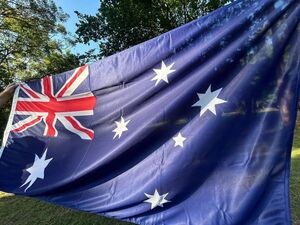 Some observers view the recent decision by Albanese’s Labour government to take an independent stance, despite U.S. opposition, regarding the recognition of a Palestinian state as a positive step toward Australia’s emancipation from American tutelage in foreign policy. This decision has slightly opened the Overton Window, creating a necessary precondition for serious activism and legitimate agitation (within legal bounds) to reduce Australia’s strategic dependence on Washington.
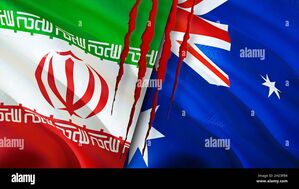
However, this process will not be easy to initiate, let alone complete, as evidenced by the recent decision by the Canberra government to expel the Iranian ambassador and other diplomats, severing diplomatic relations with the Islamic Republic of Iran. There is little doubt that the Australian government, under pressure from Washington, felt compelled to do a favour for the Trump administration and Tel Aviv, thereby reaffirming its commitment to the American alliance and acquiescing to Israel’s demands (though official Canberra denies this). The diplomatic presence of Iran in Australia, though entirely legitimate, clearly bothers Israel, primarily due to Iran’s support for the Palestinian people’s struggle for freedom and self-determination.
Insinuations by Australia’s counterintelligence agency ASIO about the alleged involvement and responsibility of Iranian diplomats in two antisemitic attacks in Australia seem, at the very least, amateurish and unconvincing, especially since no irrefutable evidence has been provided. Such claims also contradict the modus operandi of Iranian diplomacy, which is respected even by anti-Zionist-oriented Jews worldwide. Such actions would also be contrary to Iran’s interests, as they would yield no benefits and result in significant losses. This is further inconsistent with Iran’s principled stance toward Jews globally who are not connected to the crimes of Benjamin Netanyahu’s Zionist regime.
Interestingly, a group of American and European journalists visited Tehran just before Israel’s bombing of Iran. Among them were Jews, including Max Blumenthal, the founder of the influential alternative media company GrayZone in Washington. Blumenthal is the son of Sidney Blumenthal, a prominent member of the American liberal establishment and former close advisor to President Bill Clinton. His son, Max, who visited Iran and produced a documentary about it, is one of the most principled critics of Israel and U.S. foreign policy in the West today.
The expulsion of Iranian diplomats may temporarily appease the Zionist-Israeli lobby in Australia, the genocidal regime in Tel Aviv, and Trump’s pro-Israel administration in Washington. However, in the long term, Australia may face greater consequences than Iran, especially considering Iran’s indispensable role during the presence of Australian troops in Afghanistan and Iraq. Iran provided intelligence support that likely saved the lives of Australian soldiers targeted by terrorist groups like ISIL and Al-Qaeda, whose former leaders now hold positions of power in Damascus and some in Kabul.
This was well understood by former Australian Foreign Minister Gareth Evans, a veteran of Australian politics in the Labour government and a leading advocate for recognizing Palestine. As chancellor of the Australian National University (ANU) in Canberra (where I also studied) Evans visited Tehran a decade or so ago to foster closer educational ties between the two countries. He met with members of Iran’s academic community and Ali Akbar Velayati, an advisor to Iran’s Supreme Leader, Ayatollah Ali Khamenei, following the signing of the nuclear deal (JCPOA).
 Subsequently, Foreign Minister Julie Bishop, during the Liberal-National government, officially visited Iran. Bishop discussed establishing various forms of cooperation between the two countries, including intelligence cooperation, particularly due to Australia’s earlier military presence in Iraq and Afghanistan and Iran’s proven capabilities in combating ISIL and other extremist groups that pose a threat to Australia’s security interests.
However, following her visit, Bishop faced a media onslaught in Australia, both for wearing a hijab during her meetings in Tehran with President Rouhani and her Iranian counterpart Javad Zarif, and, more significantly, for daring to raise the issue of intelligence-security cooperation with Tehran. This was evidently a red line that the Israeli-Zionist lobby could not tolerate. Bishop was particularly demonized in media owned by Rupert Murdoch, an Australian Protestant, media mogul, and Zionist living in the U.S. Bishop was subsequently removed from her position as Foreign Minister and deputy leader of the Liberal Party. Shortly afterward, she left political life and was appointed chancellor of ANU, succeeding Evans. Some analysts believe her political downfall was orchestrated by the American establishment and the Israeli lobby in Australia, which evidently opposes serious diplomatic relations between Australia and Iran.
 Osman Softić is a Research Fellow at the Islamic Renaissance Front. He holds a BA degree in Islamic Studies from the Faculty of Islamic Studies of the University of Sarajevo and has a Master degree in International Relations from the University of New South Wales (UNSW). He contributed commentaries on Middle Eastern and Islamic Affairs for the web portal Al Jazeera Balkans, Online Opinion, Engage and Open Democracy. Osman holds dual Bosnian and Australian citizenship.