
By Osman Softić || 15 September 2025
By sponsoring peace between Armenia and Azerbaijan, Washington is squeezing out Russia out and getting foothold in the South Caucasus where it never had significant influence
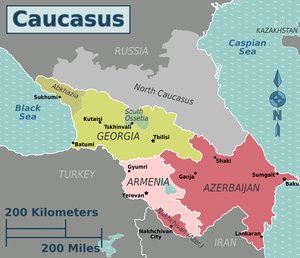 For three decades, parts of Azerbaijan were under Armenian occupation—a small state lacking natural resources and strategic advantages, unlike Azerbaijan, which benefits from vast oil and gas reserves. Nevertheless, Armenia had a powerful and influential diaspora and strong lobbies in France, the United States, and Russia, and was a darling of the West, especially in the first decade after the collapse of the Soviet Union. Russia also sided with Orthodox Christian Armenia as its protector. Poorly-armed Azerbaijan, without powerful patrons in the region or the world, faced the challenge of caring for forcibly displaced populations from occupied territories that suffered severe crimes and ethnic cleansing in the Nagorno-Karabakh region, which was effectively annexed by Armenia.
The Armenian-Azerbaijani conflict is the longest frozen armed conflict in recent world history, now nearing its final resolution following the military defeat of Armenian occupation and Azerbaijan’s victory. The Armenian government was either unable or unwilling to assist separatists in holding onto the forcibly occupied Azerbaijani territory. For decades, Russia posed as the “regional sheriff” in the Caucasus, using its military presence in Armenia and the Collective Security Treaty Organization (CSTO) mechanism to present itself as a guarantor of peace and stability.
“Israel” in the Caucasus
The geopolitical paradigm of the Caucasus has dramatically shifted in just a few years. Azerbaijan is now a free, dynamic, and ambitious regional power that has seized its opportunity and makes no secret of its desire to wield economic and geopolitical influence disproportionate to its size and actual power, not only in the Caucasus but beyond. Richard Giragosian, a former American-Armenian foreign policy bureaucrat and military expert who has long lived in Armenia, where he heads the Center for Regional Studies and serves as a leading Washington geopolitical strategist in the Caucasus, described the situation as follows:
“Armenia considered itself Israel, but the opposite happened—Armenia became Palestine, while Azerbaijan took on the role of Israel in the Caucasus.”
Baku does not hide its ambitions to expand its influence into Central Asia and parts of the Levant in Western Asia (particularly Syria). Bosnia-Herzegovina maintains friendly relations with Azerbaijan, and Azerbaijan’s diplomatic and economic influence could soon grow in the Western Balkans due to its significance in Europe’s energy supply. Europe has identified Azerbaijan as a strategic energy partner for gas procurement to reduce dependence on Russian energy. The European Union (EU) sees Azerbaijan as the best alternative.
The EU’s need for energy diversification surged in 2022 when Russia invaded Ukraine, sparking a bloody war between the political West and Russia on Ukrainian soil—a conflict now in its fourth year with no end in sight. Europe’s newfound desire to strengthen diplomatic and trade ties with Azerbaijan has exposed the hypocrisy and double standards of Europe when it comes to its commitment to promoting democratic values, protecting human rights, and other principles that the EU, as the world’s largest supranational regional organization, claims to uphold. In practice, however, this is not the case. The EU has consistently supported Israel’s genocide against civilians in Gaza and has not paused trade with this occupying power for a moment.
The EU has traditionally been closer to Armenia, providing financial and diplomatic support despite Armenia’s occupation of Azerbaijan, which violated international law. This closeness deepened after Armenia’s “color revolution,” aided by European and American NGOs and generous funding, which helped elect Nikol Pashinyan, a former pro-democracy activist, rebel, and liberal, pro-Western prime minister, in May 2018. His agenda from the start focused on severing Armenia’s ties with Russia and reorienting toward the West. From the perspective of liberal democracy, Armenia remains a relatively democratic state compared to Azerbaijan and the only liberal democracy in the South Caucasus, especially after ultranationalists returned to power in Georgia.
The Baku’s regime
In contrast, Azerbaijan is an authoritarian, secular, and majority-Muslim state ruled for over three decades by the Aliyev family dynasty. The patriarch, Heydar Aliyev, a former head of the Azerbaijani KGB, passed power to his son, current President Ilham Aliyev, before his death. His regime cannot boast democratic values and is rooted in clan loyalty and clientelism. State repression of dissidents and democratic activists, particularly Islamic movements that cross the regime’s tightly controlled religious freedoms, is not uncommon. The Baku regime is particularly sensitive to any pro-Iranian religious sentiment, given that Azerbaijan is a majority-Shiite but rigidly secular state.
On the other hand, pan-Turkic sentiment is encouraged, with the slogan *“one nation, two states—Azerbaijan and Turkey” used as a mobilizing mechanism to strengthen the alliance with Turkey. Press and media freedoms are restricted, and outlets glorifying the cult of personality of the president and his father are privileged. In Azerbaijan’s Nagorno-Karabakh, occupied by Armenia for three decades, one of the oldest Orthodox Christian communities lived. Its members (approximately 100,000) fled Azerbaijan in fear of retribution following a military campaign to liberate the region, launched on September 19, 2023, which Baku called an anti-terrorist operation against the self-proclaimed Republic of Artsakh.
The Peace Process
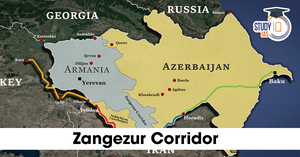 A significant step in the long and complex peace process between Azerbaijan and Armenia occurred on July 10 in Abu Dhabi, where a bilateral meeting took place between Azerbaijani President Ilham Aliyev and Armenian Prime Minister Nikol Pashinyan—the first formal meeting since their encounter in May on the sidelines of the European Political Community summit in Albania. The discussions in the Emirates focused on finalizing a peace agreement, demarcating the border between the two states, and the ambiguous meaning of unblocking regional communication routes, including the strategically vital Zangezur Corridor (named after the mountain range it would traverse). The Abu Dhabi meeting marked a turning point in the peace process that began after the Second Karabakh War in 2021, when Azerbaijan restored its sovereignty after three decades of Armenian occupation.
Details regarding changes to Armenia’s constitution, whose preamble references the 1990 Declaration of Independence that explicitly includes territorial claims on Azerbaijan, were a stumbling block in finalizing the peace agreement. Armenia will need to amend its constitution’s preamble for the peace deal to be signed. Another obstacle is the Minsk Group mechanism, established in 1992 under the OSCE, which will be dissolved. Opening regional communication routes, particularly the Zangezur Corridor, was an unavoidable topic in the peace talks.
The Zangezur or Meghri Corridor is envisioned to connect Nakhchivan, Azerbaijan’s western exclave, separated from the mainland for three decades, via a narrow strip in southern Armenia. The corridor would link Baku in the east with eastern Turkey (Kars), avoiding transit through Iranian territory, which has so far facilitated travel between the two parts of Azerbaijan. The Zangezur Corridor is considered a vital part of the so-called Middle Corridor, a segment of China’s transcontinental Belt and Road Initiative, often referred to as the modern Silk Road, aimed at establishing seamless transport from China through Central Asian states, the South Caucasus, and Anatolia to Europe.
In Washington’s strategic thinking and planning, Georgia was the preferred choice for an energy corridor to bypass Russian territory. For this reason, the political West invested significant resources over the decades to install a pro-Western liberal government in Georgia led by Mikheil Saakashvili, a former Columbia University student whose political career ended ingloriously due to his failure in the conflict with Russia. By providing military support and protection to Georgian separatists, Moscow facilitated the secession of two parts of Georgian territory, South Ossetia and Abkhazia.
Until recently, Georgia’s president was Salome Zurabishvili, a French career diplomat of Georgian origin, but after the latest elections in Tbilisi, the nationalist Georgian Dream party came to power, bringing Georgia closer to Russia again, likely learning from past losses and the example of Ukraine. Immediately after the Soviet Union’s collapse, Armenia was the West’s favorite, through which influence was exerted in the South Caucasus, only for Georgia to later take on the role of the West’s most reliable client. Georgia has recently returned to Russia’s orbit or at least under its influence, though this pragmatic move may not be irreversible.
Azerbaijan – the Geopolitical Chessboard
Azerbaijan is increasingly becoming not only an influential factor but also a state without which neither the United States nor the European Union can achieve their economic and geopolitical ambitions in the South Caucasus and Central Asia. Azerbaijan has become a cornerstone of Western policy, not only as an alternative energy source but also as a geopolitical chessboard essential to Western global ambitions. Pressure on Armenia to agree to Baku’s demands regarding the opening of the Zangezur Corridor through Armenian territory—demands Pashinyan had previously rejected—became so intense that Pashinyan had to relent.
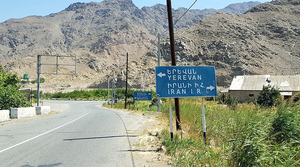 The nationalist opposition in Yerevan and the Armenian Orthodox Church, with which Pashinyan is at odds, view the prime minister as a Western client working against Armenia’s national interests and in the interests of globalists who installed him, and partly in the interests of Ankara, leaving his political survival hanging by a thread. There is a school of thought that posits Ilham Aliyev is counting on a scenario in which Pashinyan is overthrown by nationalists, as Pashinyan, as a liberal democrat, is ideologically the opposite of Aliyev, an autocrat.
Following the signing of the Memorandum of Understanding in Washington, the final part of the agreement, it is difficult to predict how the nationalist opposition in Yerevan will react. If Pashinyan were to fall from power, which is not certain at this point since Trump will likely protect him, it would open the possibility for the opposition to reject the corridor, which they argue undermines Armenian sovereignty (if implemented as proposed). In such a case, Azerbaijan might militarily occupy southern Armenia (Syunik province) to resolve the issue of Nakhchivan’s isolation. However, it is hard to believe such a move by Azerbaijan would be accepted by regional powers Russia and Iran, or by Washington and Brussels.
Trump’s administration, on the proposal of Tom Barrack, the U.S. ambassador to Ankara and the new diplomatic envoy for the Caucasus and the Middle East, suggested that the U.S. lease a portion of Armenian territory for 99 years, through which the Zangezur Corridor would pass. The corridor would be overseen by 2,000 American mercenaries (a paramilitary formation akin to the former Russian Wagner group) instead of Russian FSB personnel, as initially agreed upon by the two sides with Moscow’s mediation after the 2020 ceasefire. Armenia reportedly accepted this proposal.
Baku insists that all transport of people and goods through Armenia must not be subject to Yerevan’s border and customs controls, which has been the main point of contention. Earlier, Yerevan argued that the 40-km Zangezur Corridor would completely sever Armenia’s communications with Iran and vice versa, effectively isolating Iran from Armenia and blocking Iran. Armenia has traditionally maintained good relations with Iran, as both Armenia and Azerbaijan were once part of the Persian Empire but were taken from Persia in the 19th century after wars lost to Imperial Russia. The communist USSR later declared them Soviet republics after the 1917 October Revolution, and they gained independence in 1990.
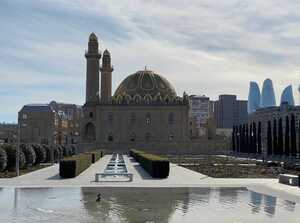 The Armenian-Azerbaijani peace process is unfolding at a time when the South Caucasus is no longer a passive periphery (deliberately blocked for three decades) but a strategic link between Europe, Asia, and the Middle East. Once viewed primarily through the lens of frozen conflicts, the region has become a major global hub and a crossroads of geopolitical competition among regional and global powers vying for control over infrastructure, transportation, alternative energy sources, and pipelines. The South Caucasus, though often overlooked, is rapidly becoming a center of the world, a chessboard where one of the main battles for dominance in the global order will be fought. This struggle will intensify as global power centers shift from West to East and traditional alliances crumble.
 Osman Softić is a Research Fellow at the Islamic Renaissance Front. He holds a BA degree in Islamic Studies from the Faculty of Islamic Studies of the University of Sarajevo and has a Master degree in International Relations from the University of New South Wales (UNSW). He contributed commentaries on Middle Eastern and Islamic Affairs for the web portal Al Jazeera Balkans, Online Opinion, Engage and Open Democracy. Osman holds dual Bosnian and Australian citizenship.