
By OSMAN SOFTIĆ || 29 September 2025
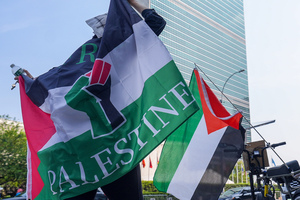 The most recent recognition of Palestine demands closer scrutiny. What lies behind the decision to recognize Palestine by several leading Western countries at this particular juncture, two years after Israel launched its murderous genocide in Gaza, the paramount crime which international community failed to stop. Moreover, Israel’s genocide has been aided and enabled by those very countries which recently recognized Palestine.
I would argue that the recognition of Palestine by Israel’s closest Western allies may well have been concocted to help maintain the status quo in order to perpetuate Israel’s military superiority and domination over the Palestinians. Each country simultaneously tried to reassure Israel by distancing itself from Hamas, labeling it as a “terrorist organization” while acknowledging Israel as an ally. Governance of a territorial entity to which these countries sought to reduce Palestine is supposed to remain exclusively under Israel’s control.
Although acts of recognition were hyped to be perceived as monumental and courageous defiance of Israel rather than tactical moves forced upon Western governments by public protests and fierce Palestinian armed resistance to Israeli aggression in Gaza, I beg to differ.
Hamas
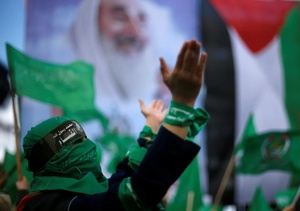 In 2006. Hamas was elected as government of Palestine as a clear winner of democratic elections held across all occupied Palestinian territories. The reason why Hamas won plurality of Palestinian votes could be credited to the Islamic resistance movement’s ability to provide social, educational and other services to the Palestinian people under occupation, but above all to Hamas’s determination to engage in an armed resistance against Israel.
Political rival of Hamas, the Fatah organization, then staged a coup and nullified the election results in the occupied West Bank where Hamas also won the plurality of votes. However, Fatah, under the leadership of Mahmoud Abbas, failed to establish its control over Gaza where an intra-Palestinian civil war was briefly fought in 2007.
Palestinian Authority (PA) and its president Mahmoud Abbas are widely despised among the Palestinians in Gaza. Abbas introduced monopoly on power. Not only does he control Fatah and the Palestinian Authority in which the PLO plays a dominant role. Mahmoud Abbas also heads the Palestinian Liberation Organization (PLO) of which Fatah is the backbone. He imposed his authority on the Palestinian politics under occupation by collaborating with Israel and the west which enabled him to systematically eliminate political competition to his rule.
In other words, Abbas is a trusted “local contractor” and compliant collaborator of Israeli occupation authorities. He also became an autocrat. However, Abbas does not have any control over Gaza where the Islamic resistance movement Hamas dominated the political landscape for nearly two decades. PA now sees its chance to expand its rule in a post-genocide Gaza. In order to achieve this goal Abbas cooperated with Tel Aviv.
However, Israelis are increasingly growing dissatisfied with his diminishing capacity or willingness to deliver results they expected. Abbas has been simultaneously talking with some wealthy Arab states whose leadership would want to see Hamas crushed and eliminated for good. In this respect political objectives of Mahmoud Abbas, Israel and Arab monarchies converged around their perceptions of Hamas. Arab monarchies view Hamas as an Iranian proxy and as their ideological nemesis, a danger and a threat to their own entrenched political systems.
The Qataris
Qatar was the only Arab monarchy which consistently supported Hamas for nearly two decades. It provided shelter to Hamas’s political leadership in Doha and acted as mediator along with Egypt, and to a lesser extent with Turkey in the negotiations process with Israel. Qatar arguably made the greatest financial contribution to Gaza’s reconstruction after several previous conflicts which saw Israel devastate Gaza’s infrastructure only to be rebuilt by Qatar. It is clear that this role for Qatar was not only approved by Washington, it also had a tacit agreement, albeit in exchange for a hefty monetary benefit by Israel’s leaders.
Qatar was assigned this role by the US which Doha was eager to play both as a way of demonstrating its generosity towards the Palestinian Islamic cause and to demonstrate its usefulness and diplomatic prowess to its overlords in the US as a reliable ally. This was a mutual expectation given Qatar’s position as the only non-Nato US strategic ally in the Arab world.
However, the old circumstances and outdated paradigms which served all players well during the course of almost two decades no longer seem to fit a new “Trumpian Middle East Order”, which the US and Israel are hell-bent on creating. Hamas has been severely crushed, except in the few remaining pockets of resistance in Gaza. Furthermore, Hamas is no longer desirable nor needed to architects of a new middle east.
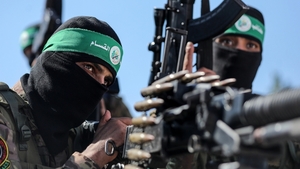 In their reasoning, Hamas has lost all its practical utility to all the major players, Washington, Israel and the Gulf Arabs. By staging the recent missile attack on Qatar, Israel, with a tacit approval by US, clearly signaled to Doha that it would not allow Hamas’s political existence to continue in Gaza. This “equilibrium of terror”, as Tariq Baconi, a brilliant young scholar of Hamas coined it, no longer defines the Israel-Palestine protracted armed conflict which took place in Gaza. Earlier arrangements suited both Israel and Hamas. This paradigm had been shattered to pieces by the Al-Aqsa flood on October 7, 2023.
Therefore, in a new post-genocide Gaza old-paradigms of conflict and military engagements will not be replicated. “Equilibrium of terror” was marked by periodic, relentless but brief, Israeli bombing campaigns of Gaza. These frequent Israeli tactical bombing raids dubbed “mowing the lawn” operations in the past decade and a half were either provoked or followed by barrages of Hamas’s primitive and ineffective rockets into Israel.
In return, Israel used its infamous “Dahiye doctrine”, a relentless arial bombing campaigns perfected in southern Shiite suburbs of Beirut called Dahiye and in southern Lebanon against Hezbollah. This paradigm was useful to Israel as it helped restore an equilibrium of terror, with periodic calm and minor improvements of life conditions for the Gazan besieged population. However, as Baconi brilliantly explained, this situation could not be sustained indefinitely. Hence, this paradigm has been undergoing significant overhaul in both Israeli and the US strategic thinking.
Qatar was an indispensable part of this diabolical puzzle. Doha was relied upon to jump in with reconstruction funds for Gaza as the willing participant and negotiation broker, thus enabling periodic peace intervals. This cycle of asymmetrical violence was repeated several times during the past decade or so.
Undoubtedly, Qatar’s usefulness may now be over in a new strategic planning for Palestinian state. It is perhaps this very fact that explains why Israel bombed Qatar with clear American and British support. Israeli flagrant aggression on Doha’s residential suburbs was conducted to send a clear message and to signal to Qatar, that its role as intermediary and the reconstruction exclusive financier will no longer be required in a newly imagined Palestinian equation with Israel and the US strategic thinking. This was also a stark warning to Qatar to immediately cease supporting Hamas.
The US lackeys
On the other hand, Mahmoud Abbas, the head of the Palestinian authority, now in his 90s, clearly no longer has the biological strength to carry out the plans of the Israeli occupation authorities. Therefore, from the perspective of Israel and that of its allies, it is necessary to employ a new strategy. This may appear to support the Palestinians, but it is not. Qatar now needs to carve out a new role for itself in the region lest it becomes rendered irrelevant in competition with its more powerful Gulf brethren who envision a different future for Palestine. Qatar will almost certainly be replaced by other Arab Gulf states such as UAE and Saudi Arabia, perhaps even by non-Arab Muslim states such as Pakistan and even Indonesia.
President Prabowo Subianto of Indonesia gave us a taste of what might occur in the near future when he boasted his readiness to send 20,000 troops to Gaza. He made this announcement in his recent speech at the UN General Assembly. He was careful to flaunt his loyalty to the US by repeating the slogan the western ears love to hear when he said “we also need to guarantee the security of Israel”.
Pakistan’s prime minister Shehbaz Sharif also stated in his visibly choreographed speech at the UN, almost certainly designed to appeal to his domestic audience back home in Pakistan, and possibly also to his potential donors and the new security partners from Riyadh. “We need to liberate Palestinians from the shackles of Israel and we need to do it with full force”, Sharif shouted at the UN podium.
This utterly duplicitous verbal acrobatics by the leaders of the two most populous Muslim countries was only matched by the absence of concrete action by 57 Muslim-majority countries of the Organization of Islamic Cooperation (OIC) when it comes to responding to the Gaza Genocide.
 Perhaps both Sharif and Subianto should first start restoring justice at home.
Sharif by liberating Imran Khan, the most popular prime minister in Pakistan’s history, from his prison cell where he is being, according to Amnesty International’s reports, unjustly imprisoned by the Sharif military-backed government on political grounds.
While Prabowo, instead of providing security for Israel, should be addressing his government’s unpopularity, mismanagement corruption and mass students and workers’ protests across Indonesian archipelago as they have been demanding more justice and accountability by the Indonesian government Subianto leads, increasingly with an iron fist as he has recently inclined to militarization of civilian affairs of the government.
Future leader or imposter?
Some analysts believe that Marwan Barghouti, a well-known dissident dubbed the “Palestinian Nelson Mandela”, who had been imprisoned by Israel for over two decades, along with thousands of other Palestinians languishing in Israeli dungeons, is being considered in some circles as a potential future leader who could unite disparate and opposing political factions in Palestine.
However, it must be borne in mind that Israel operates with strategic reasoning, and the grooming of Marwan Barghouti could also be a double-edged sword, which could potentially be used as bait to impose on Palestinians someone who may lack democratic electoral legitimacy but enjoys mythological popularity based on his status as an innocent victim of the occupation regime, which Barghouti undeniably is.
On October 7, 2023, individual ‘war crimes’ may have been committed against the Jews of Israeli kibbutzim adjacent to Gaza by Hamas commandos of the Al-Qassam Brigades. These so-called crimes, pale in comparison to the ongoing Israeli genocide in Gaza. On the contrary, the Palestinian guerrilla attack may be explained, not to say justified, as breakout by prisoners from a prison in which Israeli occupation authorities kept them for decades.
Hamas: A History from Within
 The failure of the international community to restrain Israel and respond adequately and promptly to halt the Israeli state terrorism and persecution of Palestinians created the conditions for the “Al-Aqsa Flood” to occur.
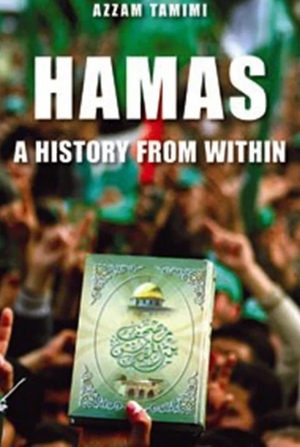
The prominent Palestinian-British political theorist and activist Azzam Tamimi, in his study titled “Hamas: A History from Within,” presented a true account and nature of Hamas, its political philosophy and vision of this Palestinian political and resistance movement. The objective and balanced picture of Hamas and its aspirations provided by Tamimi was deliberately ignored by western political narrative which consistently portrayed Hamas only as the “source of terror” and “mortal threat to Israel and Jewish existence.”
Astonishingly, political West went out of its way to prevent widespread awareness campaigns of revealing Israel as a racist apartheid state committing genocide-the worst possible form of state-sanctioned terrorism, attempting to convince global public that Israel’s genocide is ultimately the fault of Hamas alone, a “terrorist organization” Israel itself – what an irony -, had long considered a useful counterweight to other secular and leftist Palestinian national liberation movements.
 Osman Softić is a Research Fellow at the Islamic Renaissance Front. He holds a BA degree in Islamic Studies from the Faculty of Islamic Studies of the University of Sarajevo and has a Master degree in International Relations from the University of New South Wales (UNSW). He contributed commentaries on Middle Eastern and Islamic Affairs for the web portal Al Jazeera Balkans, Online Opinion, Engage and Open Democracy. Osman holds dual Bosnian and Australian citizenship.