By Fadhlullah Wilmot || 22 August 2026
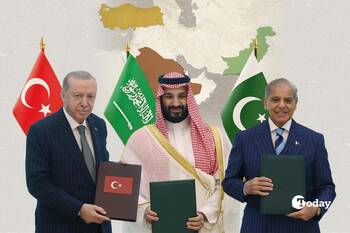 On 7 August 2026, in the holy city of Makkah, Saudi Arabia, Türkiye and Pakistan signed a mutual defence agreement declaring that an armed attack on any one of the three states would be regarded as an attack on all three. Turkish Foreign Minister Hakan Fidan called it technically equivalent to NATO’s Article 5. However, there seems to be no indication yet of plans for the integrated command structures, operational procedures or established practices of NATO.
The three states combine an estimated 1.4 million active personnel, more than 3,400 military aircraft, over 6,000 tanks, more than 340 naval assets and a combined defence budget of roughly $124 billion. Pakistan also has the Muslim world’s only nuclear deterrent. These figures do not make an alliance automatically effective, but they show that Muslim strategic agency is materially possible. By strategic agency, I mean the capacity of Muslim states to define their own security priorities, coordinate their resources and impose consequences without relying entirely on Washington or any other external power.
That is the agreement’s central significance. The Muslim world has never lacked resources; even after physical colonialism retreated, even during the period of a unipolar world of American Imperialism, it has lacked the political coordination, will and strategic capacity to convert those resources into collective power. Israel’s devastation of Gaza and its continuing operations across the region have exposed the consequences of that failure with unbearable clarity, as have the genocides in Myanmar, East Turkistan and Bosnia, and the oppression of Muslims in the Central African Republic and India. Muslim governments condemn and issue statements while the perpetrators, protected diplomatically and militarily by Washington and most Western governments, continue to act with extraordinary impunity.
The Makkah Agreement does not immediately change that reality, halt Israel’s attacks or create a unified Muslim command. But it challenges the assumption that Muslim states will remain permanently divided and can therefore be dealt with separately.
In an Islamic ethical framework, though, that challenge means little unless it is measured by the right standard. Muslim strategic agency cannot simply be the capacity to build a stronger bloc; it must also be accountable to justice, the protection of civilians, opposition to aggression and the dignity of Muslim and non-Muslim populations alike.
Why Makkah and the Role of Saudi Arabia Matter
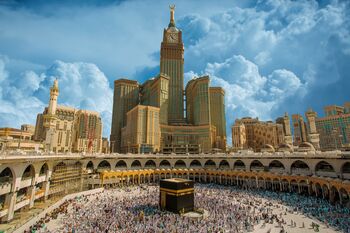 The choice of venue was not incidental. For much of the past decade, Mohammed bin Salman’s Vision 2030 project has curtailed the public authority of the religious establishment, reduced the role of the religious police and reoriented Saudi identity around state-led modernisation, entertainment and tourism. Yet the Kingdom’s legitimacy cannot be detached entirely from Islam. Makkah remains a symbolic centre for the Muslim world, and its political meaning is not something state-led modernisation can simply replace. Sami Hamdi captured the tension: “Bin Salman has spent years warring [on] the Islamic identity and aggressively trying to rip it out of the Saudi identity. It is therefore welcome and encouraging to see him return to Makkah (albeit reluctantly) in recognition of its enduring political power, potency, and significance.”
The pact’s own language leans into exactly the symbolism Hamdi points to. Signed at Al-Safa Palace, the joint statement describes the agreement as flowing from “the enduring bonds of brotherhood and Islamic solidarity” among the three states. A crown prince who has spent a decade separating Saudi legitimacy from religious authority chose the one city on earth where that separation is impossible to sustain and framed the result in explicitly Islamic terms. That contradiction could be read either as cynical dealmaking dressed in sacred language, or as a genuine, if reluctant, acknowledgment that Islamic solidarity still carries political weight no secular rebranding can fully replace. Only time will tell. However, even a leader who has de-emphasised the country’s Islamic identity still reaches for it as a source of legitimacy when assembling this coalition.
Bin Salman’s own record with Muslim-unity initiatives gives that reading some grounds for optimism, because this is not the first time Riyadh has faced this choice. In December 2019, Malaysia’s Mahathir Mohamad convened the Kuala Lumpur Summit as an alternative platform for the Muslim world, conceived with Pakistan’s Imran Khan and Türkiye’s Erdoğan. Saudi Arabia treated a platform it did not control as a threat serious enough to justify breaking it: Khan withdrew a day before travelling to Malaysia, reportedly after Riyadh threatened to expel millions of Pakistani workers and pull central bank deposits propping up Pakistan’s currency. Indonesia also pulled out, officially citing Vice President Ma’ruf Amin’s ill health, though observers pointed to Jakarta’s historical reluctance to antagonise Saudi Arabia and to Jokowi’s own earlier disappointment when Saudi investment pledges fell well short of the $6.7 billion promised in 2017. Erdoğan said both absences “could not be helped under threats from Saudi Arabia and the United Arab Emirates.”
Seven years later, faced with a comparable choice, bin Salman has instead built and led a platform of his own rather than sabotaging someone else’s and has done so without freezing out Saudi Arabia’s separate diplomatic track with Iran. The channels reopened in the 2023 China-brokered rapprochement have held throughout the current war, and Hajj access for Iranian pilgrims has expanded even as the coalition bin Salman now leads pointedly excludes Tehran. That is a meaningful shift: a kingdom that once could only say no to Muslim-world coordination it did not control now says yes to a version of its own making, while keeping its rivalry with Iran managed rather than all-or-nothing. Looked at in a positive light, it suggests a Saudi Arabia confident enough to lead a coalition rather than merely veto one it feared.
The symbolism of Makkah matters, but symbolism alone does not explain why three states with markedly different interests chose to sign. That requires looking at what each of them actually wanted.
Why the Three States Joined
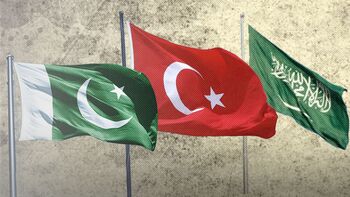 It is too soon to treat the agreement as a settled new initiative for Muslim unity: the three signatories did not arrive at Makkah with identical objectives.
Saudi Arabia’s calculation is defensive and pragmatic. Riyadh wants greater protection amid attacks and growing doubts about the reliability of external guarantees from the United States. It also wants more leverage against Iran on the issues where the two remain in direct competition such as in Yemen, over the Gulf, and Iran’s proxy influence across the region, while at the same time pursuing a less antagonistic bilateral relationship with Tehran. The two tracks are not contradictory: Riyadh is hedging against Iran on several fronts at once while keeping the relationship on a managed, diplomatic footing. Riyadh also has an interest in restraining the UAE’s efforts to establish greater regional dominance.
Türkiye seeks greater regional autonomy and influence. Ankara has opposed Israel’s conduct in Gaza and has grown increasingly concerned about Israel’s military position in Syria and the possibility that the regional conflict could expand, as well as explicit threats against Türkiye from some Israeli politicians.
Pakistan brings a longstanding defence relationship with Saudi Arabia, a large military, strategic weight and the nuclear deterrent, alongside its own economic pressures and its rivalry with India. Pakistan’s military (the real rulers of the country) remains closely tied to the United States, yet it has allowed Islamabad to join a framework that reflects growing dissatisfaction with reliance on a single external guarantor.
These differences should not be ignored, nor should the danger that the Gulf states could be drawn into an American/Israeli confrontation with Iran. But this agreement seems to indicate that three states pursuing different interests have nevertheless concluded that fragmented, externally managed security arrangements are no longer sufficient and that total reliance on the US is problematic. That makes the pact more serious than an alliance built only on rhetoric, even if its members may still diverge when their interests collide.
As the security analyst Andreas Krieg has put it, the old regional order was “overwhelmingly hub-and-spokes, with Washington at the centre,” while what is now emerging is “horizontal connectivity between regional powers.” That structural shift, more than any single issue driving any one signatory, is what makes the Makkah Agreement worth taking seriously.
The agreement formally names no enemy. Fidan has insisted it is not directed against Iran or any other country; the public statement describes it as an instrument of collective deterrence against aggression. But formal language does not exhaust strategic meaning. In the political climate created by Gaza, the increasing atrocities on the West Bank and against Arabs in Jerusalem, and Israel’s strikes on its neighbours, the pact cannot be separated from the question of Israel’s impunity, the failure of the existing regional order and the so-called Abraham Accords. Pakistan’s Defence Minister Khawaja Asif made that connection explicit when he called for a “united military front” against Israel and described it as a threat to the entire Muslim world.
His statement expressed what millions of Muslims believe. It has not yet become the common policy of Riyadh or Ankara. The members are not yet speaking with one voice.
Israel’s Contradictory Response
That lack of a unified voice has not stopped Israel’s own commentariat from disagreeing sharply about what the pact means. A Jerusalem Post opinion piece portrayed Israel as outmanoeuvring President Erdoğan and Türkiye as increasingly constrained. Another editorial in the same publication warned that the agreement had placed the Middle East on “dangerous ground” and urged Riyadh to consider whether its new alliances would empower governments seeking to make Israel the common enemy. If Türkiye is being reduced to irrelevance, the pact it helped design should not be dangerous. If the pact is dangerous, the “outsmarting” thesis has failed to reckon with its possible consequences.
That contradiction does not prove Israel has been strategically defeated by any means, but it shows the picture is unsettled. The agreement has challenged an assumption on which Israeli strategy has long depended: that most Muslim states would keep condemning Israel rhetorically while remaining divided and strategically disconnected, and that the circle of states complicit in or supportive of Israel’s position that have been buoyed by the Abraham Accords would keep widening. The diplomatic protests that followed the war on Gaza, such as the UAE’s suspension of the Negev Forum and Bahrain’s recall of its ambassador, were largely symbolic, and normalisation with Israel has continued largely uninterrupted despite the genocide and ethnic cleansing in Gaza and the West Bank.
Since it launched its post October 7 attacks on Gaza, the West Bank and neighbouring counties, Israel has also benefited from the wider assumption that American protection would keep underwriting its in the regional order and that Saudi recognition was ultimately only a matter of time. The Makkah Agreement suggests at least three Muslim powers no longer regard that arrangement as sufficient.
The Egypt Question — and the Board of Peace
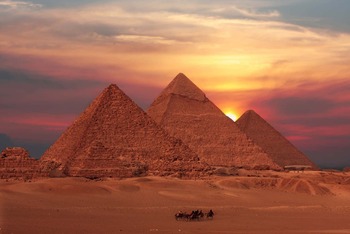 That fracture is visible closer to home too, in Egypt’s absence and in an inconsistency the signatories have not yet reconciled.
Egypt would appear to be the obvious fourth member, given its population, military size and proximity to Gaza and the Red Sea. Fidan has called Egypt a “natural partner” and said he expects Cairo to join once unspecified “technical issues” are resolved, but bin Salman may have reservations. Reports differ on what those issues are: some accounts suggest Cairo itself was reluctant, regarding the framework as too political for its own diplomatic posture; others say Ankara supported Egyptian participation while Riyadh had reservations over Cairo’s regional alignments. Karim Elgendy of Chatham House offers a more precise reading: he argues that Egypt is likely to join only if the pact’s language protects its aid relationship with Washington, does not undermine its existing treaties, including its peace treaty with Israel, and preserves its freedom to decide when and where it fights. Together these accounts point to the same conclusion: Egypt’s caution is less about the Makkah pact itself than about the wider architecture Cairo has built its foreign policy on for four decades.
That absence exposes older rivalries such as Ankara’s rivalry with Cairo and Riyadh’s with Abu Dhabi that have repeatedly frustrated collective Muslim security efforts. The Arab League and the Organisation of Islamic Cooperation have provided forums for consultation but have never produced an effective common defence structure, which is what the Kuala Lumpur Summit was attempting to build.
A wider Makkah framework could eventually overcome some of those divisions. It could also reproduce them: for as long as Saudi Arabia is the dominant player, its interests will carry disproportionate weight. The question is whether Saudi Arabia and its two partners can build institutions strong enough to survive disagreement, and whether they are willing to include other Muslim nations.
A related inconsistency is worth naming directly. Saudi Arabia, Türkiye and Pakistan, the three states signing the pact as an attempt at an independent Muslim security architecture, are themselves members of Trump’s Board of Peace. Strategic agency in one arena, in other words, has not yet translated into a consistent position in another: the same governments now building a defence pact outside Washington’s frame have also joined a body built inside it.
The Institutional Test
None of this has changed conditions on the ground. The pact has not given any signs of being able to halt Israel’s campaign in Gaza, the West Bank or Jerusalem, nor created a unified command or produced an immediate military response. That does not make it meaningless, but it means its significance lies in what it could become. The three states have the resources for a serious security framework. However, the pact does not seem to have the mechanism for placing their militaries under a unified command, nor for a coordination mechanism comparable to NATO’s. The three countries doctrines, suppliers, training systems and priorities differ. Aircraft, tanks and soldiers do not become a common force merely because leaders sign a document.
Saudi Arabia has tried this before, and the precedent is not encouraging. Riyadh’s 2015 Islamic Military Counter Terrorism Coalition expanded beyond 40 member states but never evolved into a coherent alliance. It has been confined largely to conferences and a single joint exercise in 2016, undone by the same rivalries it was meant to overcome, with Saudi Arabia and the UAE on opposite sides in more than one theatre and Qatar and Bahrain in opposing camps throughout. The last multilateral alliance Riyadh actually led was the 2015 coalition against the Houthis in Yemen, a war fought against a Muslim population, and a humanitarian catastrophe the Kingdom has struggled to end even now. Neither precedent disqualifies the Makkah pact from being different, but the burden of proof sits with this pact, not with the sceptics.
The agreement will be judged by implementation. Its public wording says an attack on one will be regarded as an attack on all, but it does not yet spell out an automatic military response. The test will be whether members establish clear procedures for consultation, intelligence-sharing, logistics, air defence and military assistance. Washington has a long record of shaping that kind of outcome: its preference for bilateral ties over multilateral coordination among its Muslim-majority partners in the form of the hub-and-spokes structure Krieg describes has historically kept those states dependent on Washington rather than each other, and the US continued military aid to Egypt even after the 2013 coup that removed an elected, Muslim Brotherhood-rooted government; a coup that was also supported by the Gulf states. Whether Washington plays a similar role here remains to be seen, but the pattern is not new.
Türkiye has announced plans for ministerial coordination, joint exercises and deeper defence-industrial cooperation, and the agreement is expected to establish a ministerial committee and a general secretariat in Saudi Arabia. Those mechanisms matter more than the symbolism of the signing ceremony, though Saudi-based institutions such as the OIC and the Muslim World League have a history of bending to Saudi interests rather than transcending them. The real test will come when a member is genuinely threatened. Will the others provide military assistance, intelligence, logistics and diplomatic backing? Will “an attack on one is an attack on all” remain a sentence in a communiqué?
From Ceremony to Strategy
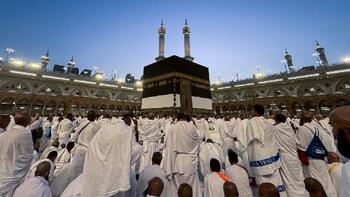 Muslims can welcome the Makkah Agreement without confusing a declaration of solidarity with solidarity in action. The pact is cautious, incomplete and driven by mixed motives, but it acknowledges that Muslim security cannot remain entirely dependent on Washington, or on a regional order in which Muslim states are managed separately.
Its credibility will depend on implementation. Will Saudi Arabia, Türkiye and Pakistan establish consultation procedures, intelligence-sharing arrangements, joint exercises, air-defence coordination, logistics agreements and a clear timetable for military cooperation? Will they define what “an attack on one is an attack on all” actually requires, and will they make that definition public?
They must also answer a deeper question: is this framework intended merely to protect governments, or will it protect Muslim peoples from aggression, mass displacement and the deliberate destruction of civilian life? In an Islamic ethical framework, security cannot be reduced to regime survival. It must include justice, protection and accountability.
The Makkah Agreement will not by itself resolve the issue of Palestine or unite the Muslim world. Its importance lies in whether it creates institutions capable of surviving disagreement and acting when action is costly. Can three capable Muslim states sustain cooperation beyond the crisis that brought them together?
If it produces exercises, intelligence cooperation, defence coordination and a credible response to aggression, it could become the foundation of a wider Muslim security framework. If it produces only ceremonies and communiqués, it will join the long history of promises made in the name of Muslim unity and abandoned when unity becomes costly.
The question is no longer whether Muslim states possess the resources to act. They clearly do.
The question is whether their rulers possess the political will and whether Muslim societies will insist that Islamic solidarity must mean more than grief, speeches and flags.
It must mean protection, deterrence and consequences.
 Haji Fadlullah Wilmot is a member of the Board of Directors of the Islamic Renaissance Front. He formerly served at universities in Indonesia, Malaysia and Australia but after the tsunami in Aceh became involved in the humanitarian and development sector. He has worked in Indonesia, the Philippines, Malaysia, Cambodia, Vietnam, Solomon Islands, Bangladesh, Pakistan, Jordan, Lebanon, Kenya, Sudan, Somalia, Afghanistan and Iraq. As a volunteer with the Australian Muslim Advocacy Network he is now monitoring anti Muslim hate speech in the electronic as well as social media that is exploding in response to right wing posts about what is happening in Gaza and also works with organisations supporting Muslim converts.