17 July 2025
The absence of a strong, collective condemnation of attacks on Iranian sovereignty reflects a political calculus that prioritises national interests over pan-Islamic solidarity.
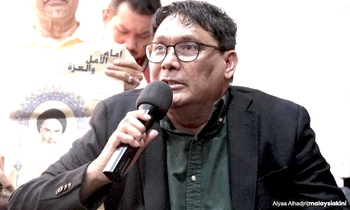 Dr Ahmad Farouk Musa, Founder and Director of the Islamic Renaissance Front of Kuala Lumpur, made the statement in an interview with IQNA.
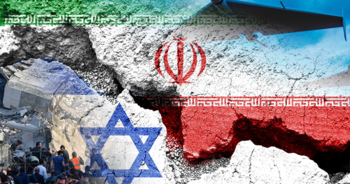
The Israel-Iran war, also called the Twelve-day War was an armed conflict in the Middle East fought between Israel and Iran during June 2025. The outbreak of direct hostilities between Israel and Iran represents one of the most significant geopolitical escalations in the Middle East in recent history. What began as a calculated pre-emptive by the Israel Defense Forces against Iranian nuclear facilities, under the codename Operation Rising Lion, swiftly evolved into a multi-theater war involving cyber, air, and naval engagements.
IQNA: In your assessment, what are the potential consequences of this escalation for regional peace and stability in West Asia and the broader Muslim world?
Ahmad Farouk Musa: In my opinion, the main consequence of any escalation between Iran and Israel would be a multifront regional war. We know that Iran has many proxies in the Middle East, though some, like Hezbollah and the ousted Syrian president, have been badly impaired. Nonetheless, the Houthis in Yemen are still potentially lethal and remain a threat. But more importantly, there remains the heightened risk of nuclear conflict in the region. This is a bigger threat since Israel is believed to possess nearly a hundred nuclear arsenals. In response, Iran will definitely accelerate its nuclear program and may consider pursuing nuclear weaponization. This situation could lead to the collapse of non-proliferation initiatives and trigger a nuclear arms race in the region. Ultimately, this will cause long-term damage to any prospects for peace.
In my view, in order to achieve lasting peace in the Middle East, it is essential to establish a balance of nuclear power. Iran should be allowed to possess this capability as a deterrent and to hold Israel in check. As a Muslim, I believe the Qur’an exhorts us to maintain military that instils fear in the hearts of the enemies of Allah, and hence, our enemies. In Sura al-Anfal; 8: 60, God says:
“Hence, make ready against them whatever force and war mounts (cavalries) you are able to muster that you might deter thereby the enemies of God, who are your enemies as well, and others besides them of whom you may be unaware, (but) of whom God is aware.”
I reckon that the “cavalry” mentioned in this verse, in modern parlance, refers to nuclear capability.
IQNA: Do you believe the UN Security Council’s failure to condemn the Israeli attacks reflects a structural bias in international institutions? How should Muslim-majority nations respond to such inaction?
 Ahmad Farouk Musa: Yes, I believe it does! The UN Security Council’s repeated failure to condemn Israeli attacks, particularly during moments of heightened conflict in the region, has reignited long-standing debates about structural bias within international institutions. This raises the question: does this inaction reflect an inherent flaw in the design and operation of global governance structures? If we examine it closely, the UN Security Council’s shortcomings are a symptom of deeper systemic biases embedded in the architecture of international power itself. Central to this issue is the veto power wielded by the five permanent members of the Security Council, namely the United States, the United Kingdom, France, Russia and China. This privilege allows any of these countries to unilaterally block resolutions, regardless of international consensus. For example, in the Israeli-Palestinian conflict, the US has frequently exercised its veto power to shield Israel from condemnation for its atrocities.
Our former Prime Minister Tun Dr Mahathir Mohamad has raised this issue before. The structural imbalance is evident in the Council’s composition itself. We don’t see representation from Africa, Latin America and Asia. Consequently, the perspectives of many nations, especially those in the Global South, are marginalized. As a result, issues affecting these regions, such as the Iran-Israel war and the Israeli-Palestinian conflict, are often filtered through the geopolitical interests of a few powerful states rather than through the lens of international law or humanitarian principles.
Such inconsistencies erode trust in the United Nations and reinforce perceptions of structural bias. When some countries are held accountable for violations while others are shielded due to their alliances with powerful states, it undermines the principle of equal sovereignty and the rule of international law. This dynamic perpetuates a system where the principles of justice and accountability are applied unevenly, leading to further instability and disillusionment among affected nations. I believe that without meaningful reform, such as limiting the use of the veto or incorporating the Global South as members, the Council’s ability to function as an impartial arbiter of global peace is simply farcical.
Regarding how Muslim-majority nations should respond to this inaction, my simple answer is that Muslim nations should reconsider their approach to international diplomacy and develop a collective response. Admittedly, this is easier said than done. We know that fragmentation among Muslim nations has been the greatest weakness. While they hold a potential collective voice through the Organization of Islamic Cooperation (OIC), which consists of 57 members, Muslim nations, unfortunately, lack unity in action. This disunity appears to be the goal of the superpowers, who exploit sectarian issues such as Sunni and Shia divisions to keep them fragmented. Some Gulf nations could strategically use their economic leverage to defend the ummah, but sadly, they are more subservient to US interests, as evidenced by the presence of about 5-7 large-scale US military bases in the Gulf region.
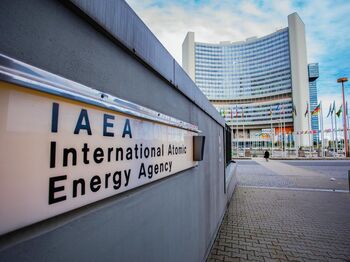 IQNA: Iran has formally condemned the silence of the International Atomic Energy Agency (IAEA) regarding US-Israeli strikes on its nuclear facilities. Shouldn’t the IAEA be equally concerned about attacks on peaceful nuclear infrastructure, regardless of the country involved?
Ahmad Farouk Musa: Absolutely! The IAEA is mandated to address any attack on peaceful nuclear infrastructure, regardless of the targeted nation. It has a critical responsibility: to ensure the safety, security and integrity of nuclear facilities worldwide, free from political bias or geopolitical influence. The agency’s silence in the face of US or Israeli strikes on Iran’s nuclear sites, particularly those involved in peaceful nuclear programs, raises questions about its consistency and credibility. Any armed attack on a safeguarded nuclear facility, whether in Iran, Ukraine or Japan, should provoke serious concern or condemnation, especially if it poses risks of radioactive leakage, environmental damage or threats to civilian lives.
Interestingly, the IAEA has responded vocally to threats near nuclear plants in Ukraine, issuing urgent appeals to protect nuclear safety. Yet, it remained silent or muted when Iran’s Natanz or Fordow facilities were attacked. This inconsistency signals a troubling lack of impartiality or, worse, hypocrisy, which fuels the perception of geopolitical bias. As a signatory of the Non-Proliferation Treaty (NPT) and under extensive IAEA monitoring, Iran deserves consistent treatment. When the IAEA fails to criticize attacks on Iranian nuclear infrastructure, it undermines its own claim to neutrality. I have to stress here that upholding neutrality is not optional; it is fundamental to the IAEA’s legitimacy and effectiveness in an increasingly volatile global landscape.
IQNA: What role can Malaysia, as a leading Muslim-majority country and a member of the Non-Aligned Movement, play in mobilizing diplomatic efforts against Israel’s aggression?
Ahmad Farouk Musa: I believe that as a prominent Muslim-majority nation and an influential member of the Non-Aligned Movement (NAM), Malaysia holds a unique and strategic position to enhance diplomatic efforts towards Israel’s aggression against Iran. While Malaysia cannot directly prevent Israeli actions, it can play a pivotal role in shaping the global narrative, rallying support for international law, and mobilizing solidarity within the Global South. As a trusted and principled voice in both the Muslim world and the Non-Aligned Movement, Malaysia has the diplomatic clout to defend Iran’s sovereignty without endorsing its policies, and to challenge militarised impunity without being entangled in bloc politics. By taking this approach, Malaysia not only reaffirms its commitment to justice but also bolsters the legitimacy of international norms that are currently under threat.
IQNA: Some argue that this moment is a critical test of Muslim unity. Do you believe the Muslim world has responded adequately to Israel’s actions, particularly in defence of Iran as a fellow Muslim country?
Ahmad Farouk Musa: The question of whether the Muslim world has adequately defended Iran invites a deeper reflection on both intra-Muslim unity and the geopolitical realities that constrain it. While we have seen symbolic expressions of outrage, the collective response has unfortunately fallen short of demonstrating a cohesive, strategic and principled solidarity. As I said before, one of the core factors limiting robust support for Iran is the Sunni-Shia divide. This was exacerbated by decades of mistrust and rivalry between Iran and key Sunni Arab powers such as Saudi Arabia and the UAE. Although recent diplomacic efforts, such as the Iran-Saudi rapprochement, are positive signs, they have yet to translate into a coordinated defence or a unified political front against Israeli aggression.
Subsequently, many Muslim-majority countries have adopted ambiguous or neutral stances, especially those aligned with Western powers or dependent on US security guarantees. To me, this absence of a strong, collective condemnation of attacks on Iranian sovereignty reflects a political calculus that prioritizes national interests over pan-Islamic solidarity. The spirit of pan-Islamism observed during the time of Abduh and Afghani do not seem to exist anymore. We noticed that the OIC’s response has been subdued, if not entirely absent. This silence raises questions about double standards: why is Palestinian suffering vocally condemned by many Muslim nations, while Iranian sovereignty is not defended with the same intensity and fervour?
IQNA: What message does the international community’s silence send to countries contemplating similar acts of aggression? Are we witnessing a breakdown of international norms?
Ahmad Farouk Musa: The international community’s silence in the face of Israeli strikes on Iranian territory, particularly targeting nuclear infrastructure, has grave implications that extend far beyond the Middle East. The inaction of Western and independent powers sets a dangerous precedent, emboldening states to consider unilateral aggression without fear of consequences. This silence is far from neutral; it actively erodes the credibility of international law and undermines the global order. By overlooking blatant violations, the global community weakens the institutions it claims to uphold, such as the United Nations and the International Criminal Court (ICC), rendering them ineffective in deterring future aggression. This could become a template for future acts of aggression, where states take justice into their own hands, leading to a retreat retreat from accountability within the global system. The stakes are not only about Iran’s sovereignty, but also about the integrity of the international order itself.
As to the second part of the question, the answer is a resounding yes! We are indeed witnessing a breakdown of international norms. What was once regarded as a common framework for peace and accountability is increasingly seen as optional or manipulable. Although the structure of global institutions remains intact, their authority and legitimacy are undermined by inaction, politicisation and selective enforcement. The consequences are already evident, and if this trend continues, it could herald a new, more unstable international era where might replaces right, and chaos supplants order.
IQNA: In your opinion, what long-term strategies should Muslim nations pursue to ensure that their collective voice is heard, and that such acts of hostility—whether against Palestine, Iran, or others—are not normalized or overlooked?
 Ahmad Farouk Musa: This question requires a long elaboration, but I’ll just summarize my thoughts. In light of ongoing global injustices, from the suffering in Palestine to military hostilities against Iran, Muslim nations find themselves at a critical crossroads. Despite the demographic, economic and cultural strengths of the Muslim world, their collective voice is frequently marginalised in global forums. To counter the normalisation of hostility and defend international justice, Muslim-majority states must adopt long-term, coordinated strategies that go beyond mere rhetoric and focus on institutional, economic and diplomatic leverage.
Without doubt, I can say that the marginalisation of Muslim voices and the acceptance of aggression will persist unless Muslim nations shift from reaction to strategy. Through institutional reform, economic cooperation among the Muslim nations, control over narratives, diplomatic diversification and principled unity, they can ensure that injustices are not overlooked and that their collective dignity and sovereignty are defended. I think the time for symbolic gestures has passed; what is needed now is a coordinated and visionary geopolitical strategy. As Allah says in Sura al-Baqara; 2:143:
“And thus We have willed you to be a community of the middle way, so that [with your lives] you might bear witness to the truth before all mankind, and that the Apostle might bear witness to it before you”.
Interview by Mohsen Haddadi.
The views and opinions expressed in this interview are solely those of the interviewee and do not necessarily reflect the view of International Quran News Agency.