By Osman Softić || 5 July 2026
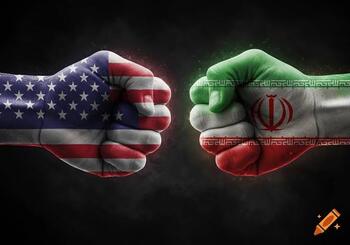 After a defensive war that began on 28. February 2026, Islamic Republic of Iran not only repelled illegal aggression of Israel and the United States of America but it emerged from the conflict as a clear moral and strategic winner. Although it suffered serious human casualties and suffered great material destruction Iran has defeated the two technologically more superior armies (one global superpower and one regional would be hegemon), both nuclear-armed states. Iran proved to be far more resilient than anyone had expected. When US joined Israel in the most recent war against Iran most pundits wrongly predicted that Tehran would capitulate in first two weeks of the war. The intensity of the American and Israeli aggression was far greater than any previous wars in the region in recent decades.
Iran was relentlessly bombarded with the full force of American and Israeli air and missile power. Precision strikes and targeted assassinations followed by carpet bombing of civilian targets brutally killed key members of Iran’s political and military leadership, including Supreme Leader (head of state) ayatollah Sayyed Ali Hosseini Khamenei and members of his family. Iran’s air and naval combat capabilities, largely inferior to those of the United States as they were never meant for a conventional war with the Pentagon, were largely destroyed in the first days of war. Israeli Airforce targeted the Iranian Caspian Sea fleet and destroyed several fairly advanced Iranian vessels in Bandar Anzali, strategically important Iranian Caspian Sea port in the north.
The Minab’s Massacre
Large number of radars, missile launchers and air defense systems were destroyed or damaged. Iran’s top state and military brass was either decimated or significantly disrupted. Nuclear facilities and missile and drone factories were targeted with bunker buster bombs. It was reported that over 15,000 targets in Iran were hit. Most of these targets, however, were civilian. Schools, hospitals, universities, pharmaceutical factories, museums, mosques, churches, synagogues, roads and bridges, oil depots, desalination plants etc. were targeted and destroyed. In the early days of aggression.
American tomahawk missiles deliberately killed 168 little girls and dozens of their female teachers in the town of Minab, in what was called double-tapped attack, when they targeted the Shajarah Tayyiba, Girls primary school. This attack appeared to have been motivated by an utter vengeance and carried an eschatological dimension driven by the hatred of Islam which has become a modus operandi deeply rooted in the mindset of new echelons of religious extremists posing as the Pentagon officials.
Despite the ferocity of the attacks, Iran responded swiftly and decisively by replacing its leadership. It mastered its military capabilities to strike back hard at American and Israeli targets by swarms of drones and ballistic and hypersonic missiles. Iran had faced an existential threat and enacted its asymmetrical military doctrine known as Mosaic defense. Initially, it seemed almost inconceivable that Iran could avoid capitulation. Rare were analysts who believed that Iran would survive politically, and strengthen its position to the point of gaining an advantage in the balance of power with the United States and the Zionist Israel. But that is exactly what happened.
The Asymmetrical Warfare
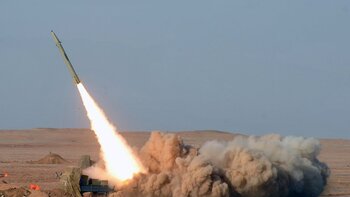 In an asymmetrical warfare where Iran as a weaker actor faced technologically superior adversaries, it had an impossible mission because in order to survive it had to, as seasoned military experts argue, tip the “balance of vulnerability” in order to avoid defeat. Iran managed to preserve its critical military capabilities by hiding them underground and brilliantly exploited the vulnerabilities of its adversaries. This logic has been the backbone of Iranian strategic military doctrine for decades. The doctrine emphasized the importance of exploiting the Achillies heel (vulnerabilities and weaknesses) of its adversaries while minimizing its own. These are key elements of the Iranian asymmetric warfare doctrine. While Iran’s hitherto deterrence posture has clearly failed to prevent American and Israeli aggression, Iran has over the past four months managed to tip the balance of military power. It has imposed serious economic and strategic costs on its enemies. It escalated the defensive attacks and exploited the vulnerabilities of its enemies.
Thanks to this asymmetric warfare doctrine, which some call the Mosaic defense. It is widely accepted that the mastermind of Mosaic doctrine was Mohammad Ali Jafari, former commander of the Islamic Revolutionary Guard Corps (IRGC). The doctrine presupposed that every single one of 31 Iranian regional provinces acted as independent units with their own arsenal, supplies, command and control structure and sealed orders, prewritten long before the conflict started. This masterful military defense strategy shows how the IRGC commanders thought decades in advance to find the Achilles’s heel of its enemies in an asymmetrical combat.
It was based upon many decades of studying both the Iran-Iraq war and the US invasion of Iraq and why the latter was initially successful to overthrow the Saddam government. Jafari for many years studied it in his strategic center and concluded that in order for defense to be affective Iran needed to work around the pyramid-like centralized command and control structures and avoid it in case that top leadership of Iran were eliminated. The Mosaic asymmetrical military doctrine enabled Iran not only to defend itself and survive but to also force its enemies to sue for peace without achieving any of its war aims.
It was already clear after the first month of fighting that the US and Israel could not defeat Iran and force it to capitulate. The Iranian constitutional order was not overthrown and the bulk of Iran’s arsenal of ballistic missiles and drones was preserved or quickly replenished. American special operation to secretly extract enriched uranium from the Isfahan nuclear facilities, disguised as pilot rescue operation, suffered a humiliating defeat by Iran. Iran was prepared to take major hits but retained the ability to retaliate with devastating and precise power with hundreds of missile and drone attacks on Israel and US military bases scattered across all Arab Gulf countries.
Iran also, to a limited and proportionate extent, damaged some energy and technological infrastructure associated with the US war machine. These attacks were proportionate, calibrated, measured and restrained but very effective. The US failed to protect its regional Arab allies (client states), and their reputation as “islands of stability” in the volatile region was called into question. Iran’s legitimate and powerful military response clearly signaled that in this regional conflict, US support for Arab client regimes was not only absent but also proved to be a sword of Damocles and a magnet for the Iranian retaliatory strikes.
The Straits of Hormuz
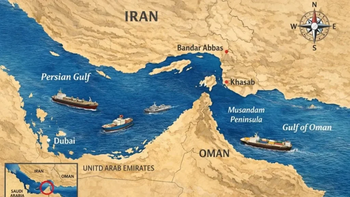 Ultimately, Iran made a strategic move by establishing full control over the Strait of Hormuz. In this way, Iran demonstrated that it could cut off key arteries of global economy by temporarily reducing or suspending the supply of oil, gas, aluminum, helium, fertilizers, petrochemicals and food, thus forcing the aggressors to impose a counter blockade outside of Hormuz and ultimately to stop the war. Iran was capable of asymmetrically targeting global energy and food supply routes, which, if it had lasted longer, would have caused the collapse of the US and world economies. Iran masterfully used its geography to its advantage. It is precisely the Iranian example that Robert Kaplan’s thesis expounded in his popular book titled: “The Revenge of Geography: What the Map Tells Us About Coming Conflicts and the Battles Against Fate”, first published by Random House back in 2012., that the world saw the real ramifications of the revenge of geography.
Surely the US strategic planners would have long envisaged and prepared for this eventuality. Iran exercised its military capacity and political willingness to impose control over Hormuz as its sovereign space. Some analysts saw it as a figurative but more potent tool than any nuclear weapon would be able to produce. Sovereign control of the Strait of Hormuz (rather than the complete blockade that Iran is accused of) has proven to be a triumphant move for military strategists in Tehran. In addition, Iran, by attacking Israel and American military bases in the region, forced Israel, the United States, and their Gulf Arab allied states to use enormous quantities of expensive and not easily replenishable anti-missile defense weapons, another form of asymmetric military doctrine.
Iran applied the horizontal military escalation tactics, threatening to further increase economic costs on its enemies. For example, by threatening to expand the blockade to Bab al-Mandab at the entrance to the Red Sea, as well as by proclaiming the doctrine of the unity of fronts, putting into operation its regional allies known as the Axis of Resistance (Iranian allies in Lebanon, Iraq, and Yemen), Iran made it clear that if its own infrastructure and energy facilities is to be targeted it will retaliate further by expanding its military operations to include other Israeli and Gulf energy and infrastructure targets, undersea communication cables in the Strait of Hormuz and military-linked civilian and transport infrastructure in the region and in Israel.
The Military Industrial Complex
Although the US and Israel have struck a large number of militaries, but mostly civilian, and infrastructure targets in Iran, killing more than 4,000 people, including women and children, and destroying thousands of residential buildings, thus making life extremely difficult for ordinary Iranians and Lebanese, their illegal attacks mainly enriched the US private military industrial complex corporations in the tunes of tens of billions of dollars. US Secretary of War Pete Hegseth sought from the US Congress to approve 80 billion for the cost of war and related expenses so far, while seeking 1.5 trillion for the next year’s US Pentagon budget (an increase by 50 percent). This very fact indicates future US intentions which herald new American wars to come. The Third Gulf War, as some call it, certainly made American taxpayers poorer.
While Iran prevented the US and Israel from achieving their declared military and strategic goals and forced them to back down, it goes without saying that Tehran remains at military and economic disadvantage and is vulnerable to future US and Israeli attacks. However, Iran has the advantage in diplomatic and strategic domain, at least for now. Iran has forced the Trump administration to seek an off ramp or an exit strategy from a war that was not only illegal but also unnecessary. Despite agreeing to a 14-point Memorandum of Understanding (MoU) signed virtually by Donald Trump and Masoud Pezeshkian on 17. June, 2026, which, by the way, should provide a framework for future peace negotiations in the next 60 days, Iran insists on retaining the sovereign right and ability to close the Strait of Hormuz and take any defensive action against critical military sites across the region should Americans or Israel violate a ceasefire agreement yet to be negotiated that should lead to a lasting peace.
The Axis of Resistance
In addition, Iran has increased its regional leverage by insisting that Lebanon is also included in the peace deal. Israelis vehemently oppose it and have threatened to undermine the peace negotiations. Iran demands Israel withdraw from South Lebanon for any meaningful talk to be resumed. Iran persuaded Trump to include the Axis of Resistance in the peace equation, especially the Lebanese Resistance movement, Hezbollah and the Yemeni Houthis (Ansarullah) as key levers of its deterrence posture. The unity of all fronts’ doctrine implies that any Israeli or US attack on any member of the Axis (Iran’s regional allies) risks a coordinated response from other members of the Axis.
Tehran will test its position of strategic advantage to improve and coordinate efforts to deter new military threats. This confirms that Iran’s strategic goal was not only to survive the onslaught as initially planned, but to preserve its strategic position by simultaneously strengthening its power, as it has been clearly documented and explained by Robert Papes, one of the US most acclaimed military and international relations scholars based at the University of Chicago.
Professor Pape modelled US-Iran war scenarios for many decades and did not hesitate to declare Iran a clear strategic winner on this war. Israel has not fulfilled any of its objectives, and the US has withdrawn from the war after achieving some of its objectives (assassinations of Iranian first layers of leadership, degrading of its military arsenal and the destruction of infrastructure). Washington, at least for now, due to the upcoming congressional mid-term elections and in order not to undermine the support of its electoral base, appears to be unwilling to take further risks and pay an even higher price in order to achieve some maximalist goals which Israel tried to impose on Washington as common priorities.
The Memorandum of Understanding
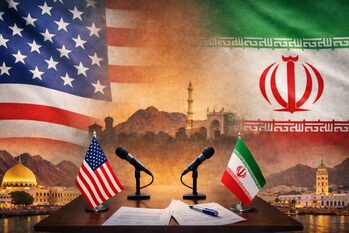 Despite its destructive capacity, irrational mindset of its leadership, and willingness to lash out at its weaker neighbors, “to kill its way to peace and security”, as US vice president JD Vance well described recently, Israel is the biggest loser of the Third Gulf War. This opinion is also admitted and shared by Israeli opposition leader Yair Lapid and most of Israeli media which ridiculed Trump and the terms of the Memorandum of Understanding (MoU) he signed with Iran. Israeli leader Netanyahu is humiliated as none of Israel’s five objectives have been achieved. These objectives are the destruction of Iran’s drone and missile programs, the denuclearization of Iran, the overthrow of the Islamic Republic, defeat of the Axis of Resistance, and the balkanization or fragmentation of Iran.
Iran masterfully utilized military, strategic, political, and diplomatic capabilities not only to survive the US-Israeli aggression but to increase its power and leverage over them. This is an undoubtedly a triumphant victory for Iran, given how many people expected Iran to follow the fate of Iraq, Libya, and Syria. Although Iran did not destroy Israel, which many unrealistic Iranian supporters considered the measure of success, Iran did inflict unprecedented damage on its enemies.
Iran’s formidable albeit asymmetrical defensive capabilities and its brilliant military strategies as demonstrated by effective use of the Mosaic doctrine, and its missile and drone capabilities, combined with using geography as its advantage made it a regional power to be reckoned with. The Memorandum of Understanding has launched a new phase of negotiation process on Iran’s nuclear program and there is every chance that Iran will retain its sovereign right to a certain level of uranium enrichment, while missile and drone capabilities and support of its regional allies is something that is not negotiable for Iran unless Israel reverses its regional hegemonic military posture towards Palestine and its Arab neighbors.
The Revenge of Geography
Should the negotiations proceed unhindered and unless Israel undermines it, Iran will lift the blockade of its side of Hormuz and get its frozen assists released in the tune of 24 billion, while the US will pressure its Arab allies in the Gulf to fork out 300 billion US dollars’ worth of investment in lieu of reconstruction funds for Iran which according to Iranian sources is estimated to be at least 270 billion US dollars. US will lift the blockade and allow Iran to sell its oil unhindered by sanctions which will be lifted. The US will be obliged to withdraw its military forces surrounding Iran and guarantees enshrined in the UN Security Council resolution will have to be given to Iran that it will not be attacked again.
Time will tell whether the MoU will be implemented and if it succeeds Iran may emerge as a formidable economic and military power in West Asia. Unless Israel and its lobby in Washington derails the negotiation process the world is going to witness the New strategic architecture in the Gulf and West Asia more broadly, unseen in recent century. Robert Kaplan would say this is mainly due to the revenge of geography which the Iranians played masterfully against its major adversaries.
 Osman Softić is a Publicist, geopolitical analyst and theologian. He researches international relations, the Middle East and Islamic movements. He is a research fellow at the Islamic Renaissance Front (IRF) in Kuala Lumpur. He graduated from the Faculty of Islamic Sciences in Sarajevo and received a master’s degree in international relations from UNSW University in Australia. He is the author of the book Geopolitics of the Muslim World in the Era of Islamophobia. He has published a number of essays in academic journals and numerous works, commentaries and analyses in the field of geopolitics and international relations in Bosnian and English.